
ABUBAKAR MALAMI'S FORFEITURE: Punishment or Absolution? – III
- Published on July 29, 2026
- By U.S. Machika
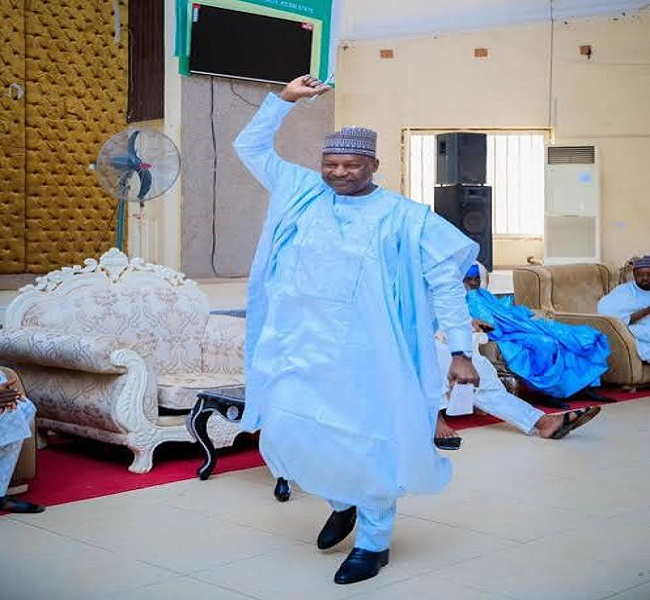
Abubakar Chika Malami, SAN
2027 Kebbi State ADC’s Gubernatorial Candidate
Continued From –
ABUBAKAR MALAMI'S FORFEITURE: Punishment or Absolution? – I
ABUBAKAR MALAMI'S FORFEITURE: Punishment or Absolution? – II
Should the Malami Standard Become the Nigerian Standard?
The first part of this discussion sought to examine the moral destination of punishment, and the second explored how both Islam and Christianity distinguish accountability from perpetual stigma. More uncomfortable questions now present themselves. Questions that extend far beyond Abubakar Chika Malami, SAN, far beyond Kebbi State and indeed far beyond the fortunes or misfortunes of any single politically exposed person.
They are questions about Nigeria herself. If accountability is a public virtue, should it not become a universal virtue? If judicial scrutiny is a legitimate instrument of justice, should its application depend upon political affiliation, personal popularity or the shifting fortunes of political power?
The controversy surrounding the forfeiture of assets associated with Abubakar Malami has unintentionally presented Nigeria with what may become a defining moral test. Whether one applauds or condemns the court's decision is, in many respects, secondary.
The greater significance of the case lies in the standard it inadvertently proposes for every politically exposed person in the country. If the standard applied in one case is just, should it not become the Nigerian standard? Conversely, if it is considered unjust, then justice itself demands that it should neither be selectively applauded nor selectively enforced. A principle worthy of admiration when applied to one public servant cannot suddenly become objectionable when applied to another.
Suppose every governor, every deputy governor, every minister, every commissioner, every legislator, every local government chairman, every political office holder and indeed every politically exposed person whose visible assets appear grossly disproportionate to every known lawful source of income were subjected to precisely the same forensic scrutiny, the same judicial process and the same legal standards.
Suppose every luxury hotel, every sprawling estate, every private university, every company, every fleet of luxury vehicles, every significant bank account and every major investment acquired during or shortly after public service were required to answer one simple question: by what lawful means were these assets acquired? What would remain? How many reputations would emerge entirely unscathed? How many political careers would survive such scrutiny? More importantly, how many Nigerians would rediscover confidence that public office remains a sacred trust rather than the shortest route to extraordinary personal enrichment?
These questions are neither expressions of political hostility nor invitations to envy. They lie at the heart of public accountability. Every civilised society reserves the right to ask those entrusted with public resources to account for wealth that appears manifestly disproportionate to every known lawful source of income. Such inquiries are neither acts of persecution nor invitations to envy. They are among the oldest instruments by which societies protect the integrity of public service. A nation that loses the courage to ask difficult questions about unexplained wealth gradually loses the moral authority to complain about corruption.
Yet Nigeria's greater tragedy may not be the existence of unexplained wealth itself. It may instead be the normalisation of selective outrage. The same society that demands rigorous scrutiny for one public servant frequently celebrates another whose visible affluence raises equally legitimate questions. Political parties proclaim integrity as a cardinal principle while often reserving their tickets for aspirants whose enormous financial capacity appears more attractive than questions surrounding the source of that wealth. Communities proudly associate themselves with extraordinary wealth without first asking whether that wealth can withstand legitimate public examination.
We have become remarkably consistent in condemning unexplained wealth belonging to our political opponents while becoming equally inventive in explaining away the unexplained wealth of those we support.
Justice, however, cannot speak with two voices. The moment it does, citizens cease to ask whether justice has been done and begin asking only whose turn it is. The rule of law derives much of its moral authority from consistency. Once accountability becomes selective, justice begins to resemble political convenience rather than impartial principle. A legal standard applied courageously against one individual but timidly withheld from another inevitably invites public suspicion. Selective accountability neither strengthens the rule of law nor restores public confidence. It merely changes the identity of those being scrutinised while leaving untouched the deeper culture that permits unexplained wealth to flourish.
Perhaps this explains why the Malami controversy deserves to be understood as something larger than litigation involving one former Attorney-General of the Federation.
Every generation encounters defining moments when a single event compels a nation to examine its own conscience. This may prove to be one of those moments. The issue is no longer whether Abubakar Malami alone should explain the legitimacy of assets associated with him. The larger question is whether every politically exposed person should willingly submit to precisely the same legal and moral examination. If accountability is genuinely a public virtue, then it cannot remain the burden of a few while the many continue to enjoy comfortable immunity.
Ironically, Nigeria once possessed a remarkably effective institution for enforcing this standard long before anti-corruption commissions, specialised courts and financial intelligence units became part of our legal architecture. It was not an institution established by legislation, nor maintained through annual appropriations. It had no investigators, no prosecutors and no courtrooms. Yet its moral authority was immense because it resided within the conscience of the community itself.
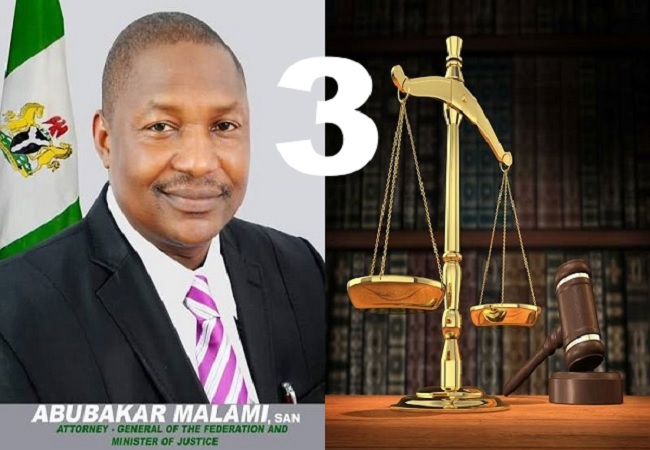
Abubakar Chika Malami, SAN
Nigeria's former Attorney-General of the Federation and Minister of Justice
Parents questioned unexplained wealth. Extended families questioned it. Elders questioned it. Religious leaders questioned it. Traditional institutions questioned it. Communities questioned it.
Prosperity was welcomed only after its legitimacy had been established. Honour attached itself not merely to wealth, but to the integrity of its source.
A young public servant who suddenly returned home displaying extravagant affluence far beyond every known legitimate source of income did not become an instant object of admiration. Before celebration came inquiry. Before applause came accountability. Before honour came difficult questions.
Where did this wealth come from? What honest labour produced it? What legitimate enterprise explains such extraordinary prosperity? Those questions were never regarded as insults. They were recognised as expressions of communal responsibility and moral vigilance.
Somewhere along our national journey, that institution quietly collapsed. The questions gradually disappeared. Wealth itself became the qualification. The larger the convoy, the greater the admiration. The more extravagant the display, the louder the applause. We slowly abandoned the moral discipline that once required prosperity to explain itself before demanding society's respect. In doing so, we weakened not merely our traditional values but also the ethical foundation upon which modern anti-corruption laws ultimately depend. Laws alone cannot preserve integrity where public conscience has surrendered its responsibilities.
Perhaps, therefore, the enduring legacy of the Malami controversy will not be determined by the political fortunes of one individual or by the eventual outcome of one judicial process. It may instead be remembered as the moment Nigeria was compelled to confront a far more uncomfortable truth: justice commands its greatest respect when it is universal; accountability inspires confidence only when it is impartial; and public trust can be restored only when the same questions are courageously asked of every politically exposed person, irrespective of influence, office, wealth or political affiliation.
If that day ever returns, when parents once again question unexplained wealth, when extended families refuse to celebrate prosperity without integrity, when elders recover the courage to ask difficult questions, when communities once more measure honour by character rather than affluence, and when the law is reinforced by the moral conscience of the people, Nigeria will not merely have strengthened its anti-corruption institutions. It will have recovered something far older and infinitely more valuable: a moral civilisation that understands that wealth deserves admiration only after it has first survived accountability.
— To Be Continued —