
The Emir of Zazzau and the Recognition of MC Abubakar Sadiq Mohammed: A Home-Grown Talent
- Published on October 10, 2026
- By U.S. Machika
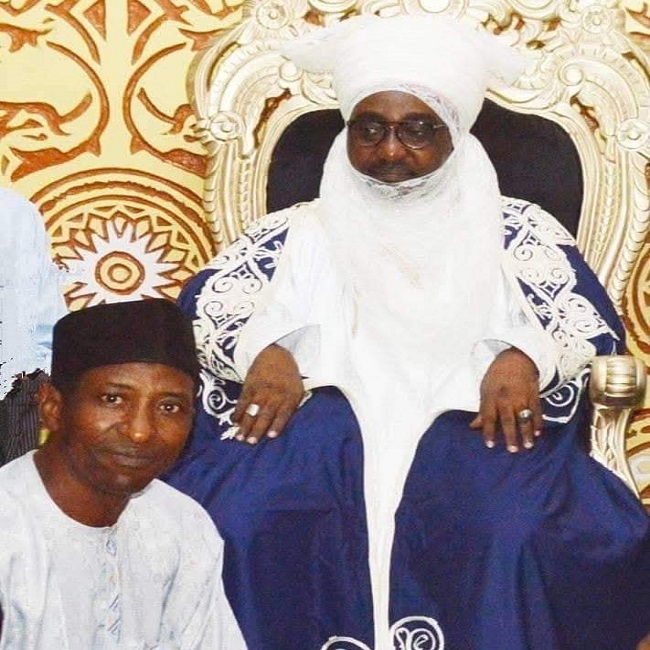
MC Abubakar Sadiq Mohammed seated alongside His Highness, Ambassador Ahmed Nuhu Bamalli, CFR, the Emir of Zazzau
What one appointment reveals about authority, professional merit and the responsibility to recognise local talent.
His Highness, Ambassador Ahmed Nuhu Bamalli, CFR, the Emir of Zazzau, deserves well-earned commendation for appointing Alhaji Abubakar Sadiq Mohammed as Master of Ceremonies (MC) to anchor the presentation of the book, EMIRS OF ZAZZAU: A Biographical Study, 1808–2025, held on 7 October 2026 to mark the Emir’s sixth anniversary on the throne. Before a distinguished audience that included Kaduna State Governor, Senator Uba Sani, and His Eminence, Alhaji Muhammad Sa’ad Abubakar III, the Sultan of Sokoto, alongside senior dignitaries from government, traditional institutions, academia and public life, the appointment provided Abubakar with a prominent platform to showcase the experience, competence and professionalism he has cultivated over more than three decades.
The significance of the appointment is best understood against the background of Abubakar’s professional record and the quality of his performance at the event. Together, these provide a basis for assessing both the suitability of the choice and the value of the recognition it represented.
In a society where imported products, foreign affiliations and external recognition sometimes attract greater prestige than locally cultivated competence, entrusting an accomplished son of Zazzau with such a responsibility carries significance beyond the event itself. The Emir’s recognition added a measure of institutional distinction to Abubakar’s long-established professional standing, while demonstrating that home-grown excellence can command attention on a national stage.
The Hausa saying, “Inuwar giginya, na nesa ka sha daɗi,” offers an illuminating perspective on this question of recognition. It evokes the familiar experience of value being more readily appreciated from a distance than at home, recalling the English observation that prophets are not always honoured in their own country. Accomplished individuals sometimes receive greater attention when influential people or institutions publicly acknowledge their worth, even after decades of professional service. The Emir’s decision deserves commendation because recognising and celebrating indigenous excellence can encourage a culture that identifies, trusts and values its own.
There is a wider institutional significance to this approach. Traditional institutions possess influence extending beyond their ceremonial responsibilities. Through their choices, they can shape public attitudes towards excellence, encourage professional aspiration and influence what a community learns to value. When a traditional ruler entrusts an important assignment to a qualified local professional, young people can see that careers built within their communities can lead to platforms of national distinction, while established professionals are reminded that years of service remain worthy of recognition. This places a responsibility on institutions to identify, nurture and deploy the competence already available within their communities.
The Emir’s engagement with local expertise is also reflected in the inclusion of local writers in the commissioned book project and in the reconstruction of Malam Abdulkarim Central Mosque. For the mosque project, Architect Namadi Sambo, the Sardaunan Zazzau and former Vice-President of Nigeria, chaired the technical committee, while former Kaduna State Governor Nasir Ahmad el-Rufai chaired the fundraising committee. These examples provide a broader context for appreciating the place of indigenous knowledge and professional expertise in important community undertakings.
Abubakar’s case carries a distinct significance. While figures such as Sambo and el-Rufai already command substantial national recognition, Abubakar is an established professional whose public profile has remained comparatively local. His appointment brought his experience before an audience of national distinction, demonstrating the value of extending such platforms to accomplished professionals whose work may be better known within their immediate communities.
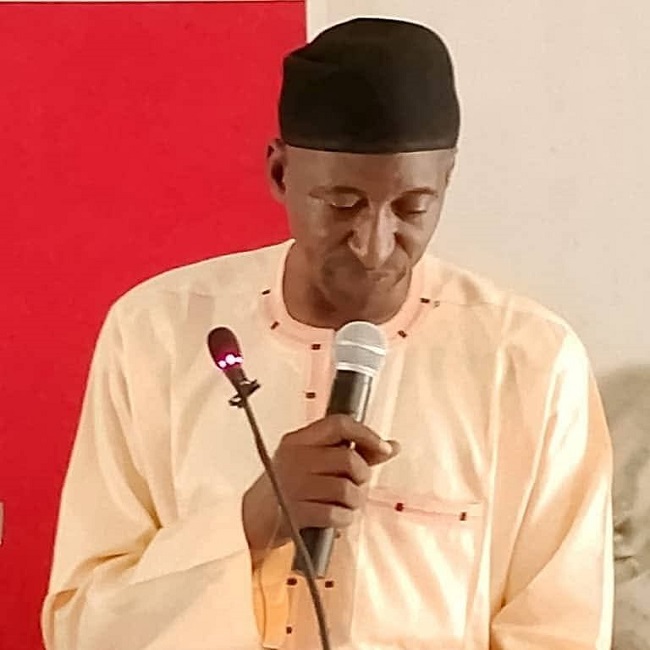
Abubakar Sadiq Mohammed
In his element as Master of Ceremonies (MC)
Abubakar’s career spans more than three decades, during which he has anchored programmes involving prominent personalities in Nigerian public life. His experience includes engagements associated with former President Muhammadu Buhari and programmes involving former Vice-President Architect Namadi Sambo. During the administration of former Governor Nasir Ahmad el-Rufai, he also anchored events at the Kaduna State Government House. His engagements have extended to programmes involving the Speaker of the House of Representatives, Rt. Hon. Abbas Tajudeen, PhD, GCON, and Governor Uba Sani within Zaria and its environs. He had also anchored the first anniversary celebration of Ambassador Ahmed Nuhu Bamalli’s reign as Emir of Zazzau. These experiences reflect a professional career built through sustained involvement in formal occasions and the demands of managing distinguished guests.
The sixth-anniversary book presentation was another significant assignment in that career, bringing together his experience of the Emir’s public activities and his familiarity with events attended by eminent personalities. What distinguished his performance was his mastery of the subject matter, his command of protocol and his ability to maintain the programme’s momentum.
From the outset, Abubakar demonstrated an understanding of the historical issues underpinning the book presentation. He offered a brief account of M. G. Smith’s Government in Zazzau, referred to the authors involved in the historical works under discussion, acknowledged the deaths of two of the authors and drew attention to gaps between earlier accounts of governance in Zazzau and the present book project. Rather than treating the presentation as a sequence of introductions and speeches, he helped establish its intellectual context for the audience. His command of the subject matter gave the proceedings substance and demonstrated that a master of ceremonies must understand not only who is present, but also why the occasion matters.
He also drew attention to the recurring significance of Wednesday in the Emir’s life: the day of his appointment to the throne, the day on which the sixth-anniversary occasion fell, and the day of the week on which the Emir was born. This observation connected the anniversary to a personal detail about the monarch, adding a human dimension while reinforcing the occasion’s significance. Such touches require preparation, attentiveness and the ability to identify details that engage an audience. They illustrate the difference between an anchor who merely follows a programme and one who helps the audience appreciate its themes.
The composition of the audience made that responsibility particularly demanding. Recognising the Governor, the Sultan, the former Vice-President, former governors, serving and former legislators, members of the Armed Forces and other security agencies required familiarity with protocol and an appreciation of institutional hierarchy. Abubakar combined this recognition of personalities with discipline in managing time. At gatherings of this stature, prolonged speeches and personal acknowledgements can easily disrupt a carefully planned programme. A competent master of ceremonies must therefore enlighten, educate and entertain the audience while protecting the schedule, respecting speakers and maintaining the dignity of the occasion. Abubakar’s performance was notably effective in these respects.
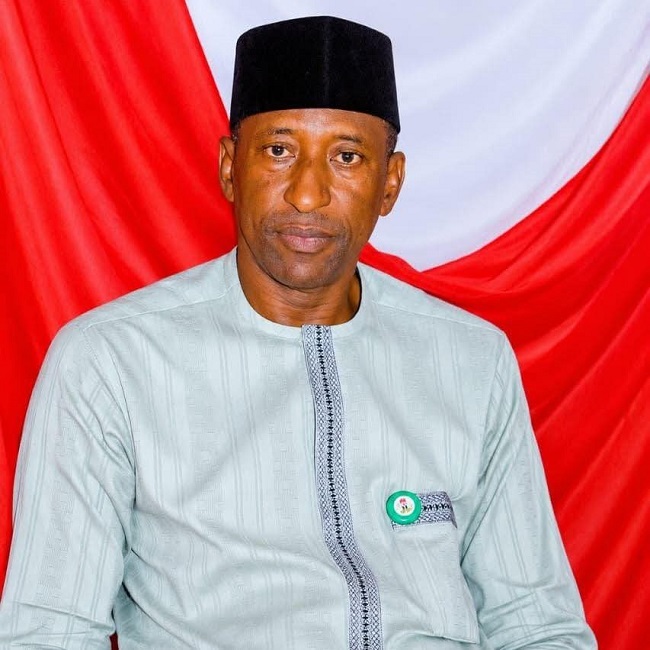
Abubakar Sadiq Mohammed
More Than Three Decades of Professional Excellence
Equally commendable was his restraint. In an environment where political personalities and traditional institutions naturally attract elaborate praise and expressions of loyalty, there was a notable absence of unsolicited praise-singing, political exaggeration and sycophancy. The anchoring remained focused on the business of the day. Such restraint was evidence of professional judgement: the event belonged to its purpose and its principal, and Abubakar’s responsibility was to serve that purpose with competence and dignity.
An especially significant moment came when the Sultan of Sokoto made remarks directly concerning Abubakar before presenting the book. His Eminence’s acknowledgement of the master of ceremonies in that setting provided a noteworthy public indication that Abubakar’s performance had made an impression. It added another dimension to an occasion in which the Emir’s appointment provided the platform and Abubakar’s performance demonstrated the substance behind the confidence placed in him; and the Sultan's remarks added another dimension to the occasion.
By all reasonable assessments, Abubakar Sadiq Mohammed’s anchoring of the presentation of EMIRS OF ZAZZAU: A Biographical Study, 1808–2025 was well above average. His performance brought together subject knowledge, protocol awareness, time management and professional restraint, illustrating the value of experience when matched with preparation and sound judgement.
The wider lesson extends far beyond Zazzau. The principle is to ensure that local origin does not become an obstacle when the required competence exists. The proper standard is merit without prejudice: recognising professional ability, nurturing its development and celebrating its contribution. Traditional institutions can help advance this principle through the people they trust and the opportunities they create.
In the final analysis, the Emir deserves commendation for recognising Abubakar’s established professional excellence, while Abubakar deserves appreciation for demonstrating its value before a distinguished audience. The true measure of a society lies not merely in the talent it produces, but in its willingness to recognise, nurture and celebrate its own.