
THE ART OF SERVING WITH DISTINCTION: A Tribute to Malam Illiyasu Muhammad Balarabe
- Published on October 4, 2026
- By U.S. Machika

Malam Illiyasu Muhammad Balarabe
The Deputy Chief of Staff (Administration) to the Speaker of the House of Representatives, Rt. Hon. Abbas Tajudeen, PhD, GCON
In the course of writing tributes, I have encountered men and women of different dispositions and temperaments. I have been approached, persuaded, appealed to, occasionally cajoled and, on some occasions, rather generously enticed to write in praise of certain personalities—requests which, more often than not, fell short of the standard I set for myself before putting pen to paper.
Ironically, the reverse has also been the case. There have been personalities who have pleaded with me not to write complimentary or commendatory pieces about them at all. This is particularly common among technocrats and, more especially, those who serve as lieutenants to people in positions of authority. Their instinct is often to remain outside the glare of publicity, allowing the office they serve and the principal they represent to occupy the spotlight.
It is, perhaps, a natural disposition among men who understand the distinction between holding an office and serving an office.
It was against this background that, when I eventually agreed to write about Malam Illiyasu Muhammad Balarabe, a familiar line of thought crossed my mind.
Malam Illiyasu Muhammad Balarabe, popularly known as DCOS, is the Deputy Chief of Staff (Administration) to the Speaker of the House of Representatives, Rt. Hon. Abbas Tajudeen, PhD, GCON. In that sense, he belongs to the second category of personalities I have just described: those who serve as lieutenants to people in positions of authority.
More importantly, there is an unusual dimension to this particular tribute.
Despite receiving several solicitations from people who admire and respect Malam Illiyasu Muhammad Balarabe, I have neither sat with him nor shared a conversation with him. In fact, I have never personally met him. Not once. Indeed, until his photograph was sent to me, I would not have been able to identify him in a crowd or recognise him on the street.
There is, therefore, something inherently unusual about writing a tribute to a man one has never met—the absence of conversations shared, encounters remembered, experiences witnessed and personal impressions formed over time.
Yet, personal acquaintance has never been the only measure by which worthy lives and distinguished service are assessed. Many of the most significant tributes—particularly those written about statesmen, academics, military officers, traditional rulers, public servants and international figures—are not necessarily based on personal acquaintance. They are based on public records, professional accomplishments, documented contributions, testimonies and, above all, the enduring significance of a person's life or service.
In the case of Malam Illiyasu Muhammad Balarabe, there is certainly no shortage of such material. His public record speaks with sufficient clarity; and when that record is reinforced by the testimony and judgement of people who have consistently advocated for this tribute, the evidence becomes compelling enough to make personal acquaintance almost incidental.
This is one such occasion.
It raises a delicate question: How does one pay a very high tribute to an exceptionally effective Chief of Staff without inadvertently creating the impression that the man who serves is himself driven by an ambition for political prominence?
That question leads, almost inevitably, to Robert Greene's much-discussed First Law of Power. Greene's first of his 48 Laws of Power carries a deceptively simple injunction: “Never Outshine the Master.”
And I began to ask myself: in a volatile political dispensation, could a tribute to Malam Illiyasu Muhammad Balarabe inadvertently provoke a backlash that might distract from, rather than promote, the very man whom his admirers seek to honour—even without the man himself being entirely aware of the torrent of requests made on his behalf?
Could such a tribute unwittingly provide a window for his critics to misconstrue its intention, or turn an innocent commendation into an opportunity for political mudslinging and calumny against him?
These questions matter because those who serve powerful principals must understand that their effectiveness should reinforce, rather than compete with, the authority of the person they serve.
But this tribute is based precisely on Balarabe's effectiveness—measured by how brightly he shines in the service of the person he serves: the Honourable Speaker of the 10th Assembly, Rt. Hon. Abbas Tajudeen.
Yes, Illiyasu Balarabe, being competent, visible, eloquent, effective and highly respected, does not necessarily draw attention away from the Honourable Speaker; rather, his effectiveness reinforces the authority of the office he serves and makes Rt. Hon. Abbas Tajudeen's work more effective.
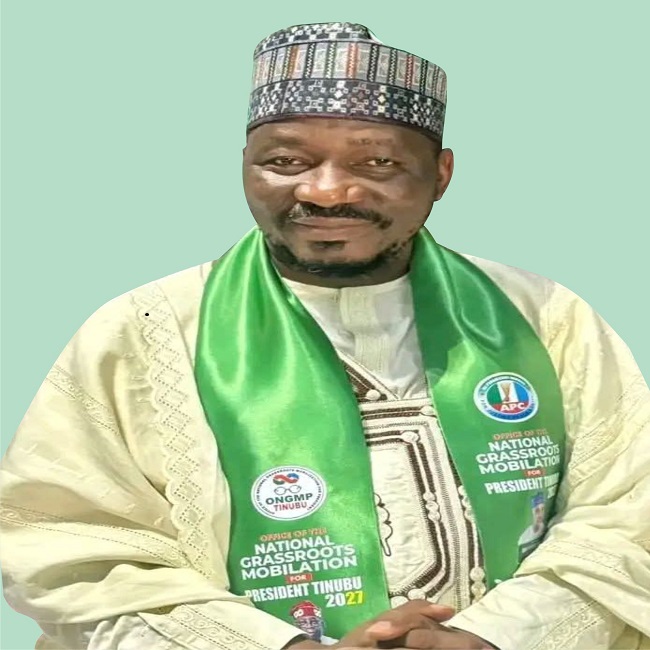
Malam Illiyasu Muhammad Balarabe
The Deputy Chief of Staff (Administration) to the Speaker of the House of Representatives, Rt. Hon. Abbas Tajudeen, PhD, GCON
From the consistent testimony I have received, Balarabe's effectiveness appears to be expressed not through a quest for prominence, but through the competence, loyalty and judgement with which he serves his principal.
As a good Chief of Staff, DCOS Illiyasu Balarabe exercises considerable authority through coordination, preparation, discretion and institutional organisation without appearing to be the source of the power. These are the often-unseen elements that build an office, strengthen its processes and make its machinery function.
This, indeed, is an important credit to DCOS Iliyasu Balarabe. He does not unnecessarily seek the spotlight, but his competence, loyalty and judgement make his principal, the Honourable Speaker, more effective.
That is the distinction this tribute seeks to examine.
After two years of service, Iliyasu Balarabe is a man whose achievement is to shine brilliantly while ensuring that Rt. Hon. Abbas Tajudeen, PhD, GCON remains at the centre of the institution he leads.
Without any doubt, he occupies a position that demands considerable discretion, institutional understanding, administrative competence and, above all, the ability to serve effectively without making the office of the Speaker about himself.
Over his two-year stint, Iliyasu Balarabe has organised, coordinated, negotiated, executed, advised and helped solve problems—while ensuring that his principal, the Honourable Speaker, remains visibly at the centre of his work.
This is where the distinction becomes important.
The office demands Balarabe's proximity to power without personalising it; influence without making influence the objective; visibility when necessary, discretion when required, and effectiveness whether or not that effectiveness is publicly acknowledged.
What I have come to appreciate about DCOS Iliyasu Balarabe is that his brilliance illuminates his role and responsibilities within the office he serves. His effectiveness does not require him to become the centre of attention. Rather, it is expressed through the quality of the service he renders and through the effectiveness of the principal whose office he helps to administer.
And perhaps that is the more useful way to approach the work of a Chief of Staff.
It requires the capacity to stand close enough to authority to understand its demands, yet remain disciplined enough to remember that the authority belongs to the office and to the principal who occupies it—not to the individual who helps administer it.
And this is where my interest in Malam Illiyasu Muhammad Balarabe becomes more than a response to the requests I have received from his admirers.
His journey into the Speaker's office did not begin there. Before his appointment as Deputy Chief of Staff (DCOS) in September 2024, he had already been involved in the Speaker's constituency structure in Zaria, where he headed and coordinated the constituency office and had earlier served as a Deputy Director in the Speaker's campaign structure.
That background provides a solid launchpad for the responsibilities he now carries. It places his present assignment within a broader experience of constituency engagement, grassroots mobilisation, political organisation and service to his principal—experience that has now been carried from the constituency level into the demands of national responsibility.
His appointment in September 2024, therefore, was not simply the assumption of a new title. It placed him in an office where administrative coordination, discretion, judgement, institutional understanding and the ability to work closely with the principal are central to the demands of the job.
But titles alone do not make a tribute.
Neither does proximity to power.
What ultimately matters is what a man does with the responsibility entrusted to him.
That is where, for me, the real substance of the tribute to Malam Illiyasu Muhammad Balarabe begins.
I have never met him. Yet his work has, in a sense, introduced him to me before I ever had the opportunity to meet him.
And perhaps there is something fitting about that.
For some men, their work introduces them before they introduce themselves.