
ABUBAKAR MALAMI'S FORFEITURE: Punishment or Absolution? – I
- Published on July 27, 2026
- By U.S. Machika

Abubakar Chika Malami, SAN
2027Kebbi State ADC’s Gubernatorial Candidate
In our traditional setting with its moral fabric, unexplained wealth did not inspire admiration until it had first survived interrogation. Society instinctively distrusted prosperity that appeared overnight without any discernible source of legitimate enterprise. It was common then for a young man who suddenly displayed extravagant affluence, far beyond every known lawful source of income, to be summoned—not by an anti-corruption agency, but by his parents, extended family, respected elders and members of community.
They considered it both a moral obligation to ask difficult questions. Where did this wealth come from? What legitimate business produced such prosperity? How did an ordinary public servant suddenly become the owner of sprawling estates, fleets of luxury vehicles and investments whose value bore no relationship to every known legitimate income?
Those questions reflected neither envy or malice, but a society that understood honour could not be divorced from integrity and that public trust could not comfortably coexist with wealth that refused to explain itself.
Somewhere along our national journey, however, that moral instinct began to fade. Gradually, wealth itself became the qualification. The larger the convoy, the louder the applause. The grander the mansion, the greater the admiration. Society became less interested in how fortunes were accumulated than in how extravagantly they could be displayed.
Political parties increasingly searched for the wealthiest aspirants rather than the most principled leaders. Communities competed to identify with them. Religious organisations proudly reserved the front rows for them. Traditional institutions decorated them with prestigious titles. Young people gradually stopped asking, “What did he do to become wealthy?” and began asking instead, “How can I become like him?”
In the process, unexplained wealth quietly lost its power to provoke public discomfort. Perhaps that is one of the greatest tragedies of contemporary Nigeria—not merely the existence of corruption, but the gradual erosion of society’s moral courage to question wealth that cannot readily account for itself.
It is against this backdrop that the recent court-ordered forfeiture of assets associated with Nigeria's former Attorney-General of the Federation and Minister of Justice, Abubakar Chika Malami, SAN, has generated passionate reactions across the country.
Predictably, opinions have largely followed political fault lines. Those who have long opposed Malami regard the forfeiture as a reaffirmation of what they believe had always been obvious—that his years in public office witnessed an extraordinary accumulation of wealth which, in their estimation, could not be reconciled with every known lawful source of income.
His supporters, however, have advanced an entirely different narrative. They argue that the legal proceedings are inseparable from politics, pointing to the timing of the litigation and contending that the scrutiny intensified only after his widely reported political ambition to contest the governorship of Kebbi State became public knowledge.
Between these opposing narratives stands the ordinary Nigerian, attempting to separate law from politics, facts from emotion and justice from partisanship.
For every neutral observer, it would be difficult to dismiss either perspective outright. Each side advances arguments which, from its own standpoint, appear logical and persuasive. That was precisely why I initially resisted the temptation to lend my voice to the controversy. It was not because the issues lacked significance, but because they appeared destined to be consumed by the familiar contest between political loyalty and political hostility.
Yet, as I continued to follow the public conversation, I became increasingly uneasy—not because of the legal arguments advanced by either side, but because of the moral conclusions that many seemed so eager to draw. The forfeiture order was being interpreted by some not merely as a judicial consequence, but as the final and irreversible condemnation of an individual. The assumption appeared to be that once a court had spoken, society was entitled, indeed obliged, to continue speaking indefinitely through ridicule, public castigation and perpetual stigma.
It is this assumption, rather than the merits of the forfeiture itself, that prompted this essay.
Before proceeding further, intellectual honesty requires one important qualification. The decision presently attracting national attention is that of a trial court. Under Nigeria's constitutional order, every litigant possesses the right, subject to the law, to challenge such a decision before the appellate courts. Whether he chooses to exercise that right remains a matter for him and his legal advisers. Should he do so, the legal issues may yet be examined by the Court of Appeal and, if necessary, by the Supreme Court of Nigeria.
Nothing in this essay seek to anticipate or to prejudice that judicial process. Courts exist precisely because justice must not only be done but must also be seen to follow due process to its logical conclusion.
Even if, solely for the purpose of discussion, one assumes that the findings of the trial court are legally sound and that the forfeiture of the disputed assets represents a lawful consequence under Nigerian law, another question immediately emerges—a question that neither the trial court nor any appellate court is called upon to answer.
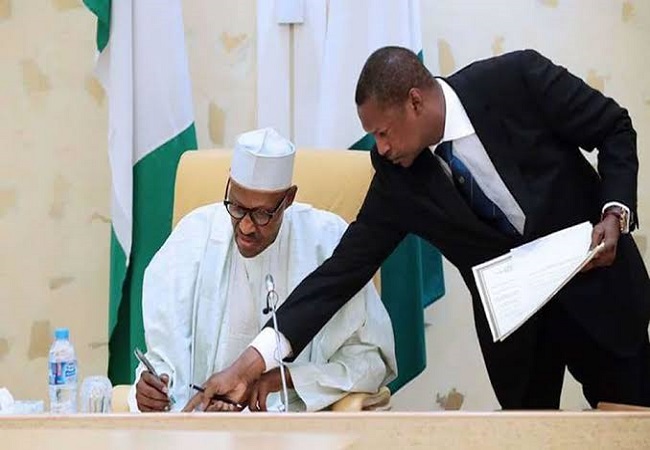
Abubakar Chika Malami, SAN
Nigeria's former Attorney-General of the Federation and Minister of Justice
What is the ultimate destination of justice? If the law has spoken, should society continue speaking through endless condemnation, or does there come a point at which punishment has fulfilled its purpose?
This question is neither new nor peculiar to Nigeria. It has confronted civilisations for centuries because every legal system, every moral philosophy and every religious tradition has had to grapple with the same dilemma. What exactly is punishment intended to achieve? Is its purpose merely to inflict lawful consequences upon wrongdoing, or does it serve a higher moral objective?
Once property has been forfeited, liberty curtailed, fines imposed or any other lawful sanction executed, has justice completed its work, or is society expected to continue the punishment through public castigation and socially ostracise?
The answer to these questions determines whether justice remains an instrument for restoring moral order or gradually degenerates into an instrument of perpetual stigma clothed in the garments of righteousness.
However, justice is disciplined by law. It is measured, proportionate and conscious of its limits. Public castigation recognises no such limits. It is seldom satisfied by accountability alone. Instead, it seeks to prolong punishment through humiliation, often mistaking perpetual condemnation for moral virtue.
It is precisely at this point that every society must pause and ask itself a profoundly uncomfortable question: are we still pursuing justice, or have we unconsciously allowed accountability to degenerate into perpetual public castigation?
It is here that the controversy surrounding Abubakar Malami invites reflection beyond partisan politics. Whether one supports him or opposes him is ultimately secondary to a far older and more enduring question. Assuming, solely for the sake of argument, that the law has been correctly applied and justice lawfully administered, what remains for society to accomplish? Is there a moral distinction between holding an individual accountable and refusing to allow him ever to emerge from beneath the shadow of that accountability? Does punishment have an end, or is social stigma intended to become a second sentence imposed not by the courts but by public opinion?
These questions become even more compelling when examined through the moral traditions that shape the overwhelming majority of Nigerians. Both Islam and Christianity insist that wrongdoing must never be trivialised. Both recognise the necessity of justice and accountability. Yet both also devote remarkable attention to the moral purpose of punishment itself – to uphold justice by affirming accountability, protecting society, deterring wrongdoing and restoring the moral order disturbed by the offence.
Curiously, however, much of the public debate surrounding the Malami forfeiture has concentrated almost entirely upon the legal consequences while paying comparatively little attention to the deeper moral philosophy that underlies justice itself. That omission is both striking and unfortunate because the law determines what society may do, whereas religion often asks what society ought to do after the law has completed its work.
It is at this point that this discussion departs from politics and enters the realm of moral philosophy. This series of essays seeks to examine a question that transcends every individual, every political party and every generation. If justice has lawfully exacted its due, does punishment merely satisfy the demands of the law, or can it also mark the beginning of moral absolution? And if religion teaches that accountability may coexist with divine mercy, upon what moral foundation does society erect the doctrine of perpetual stigma?These are the questions that this essay seeks to explore.
Yet, the questions raised so far naturally lead to another, perhaps even more uncomfortable, question. It is a question not about Abubakar Malami alone, but about every politically exposed person whose assets appear grossly disproportionate to every known lawful source of income. Should the standard by which one public servant is judged become the standard by which all are judged? That is the question to which the second part of this series will turn.
– To Be Continued –