
ABUBAKAR MALAMI'S FORFEITURE: Punishment or Absolution? – II
- Published on July 28, 2026
- By U.S. Machika
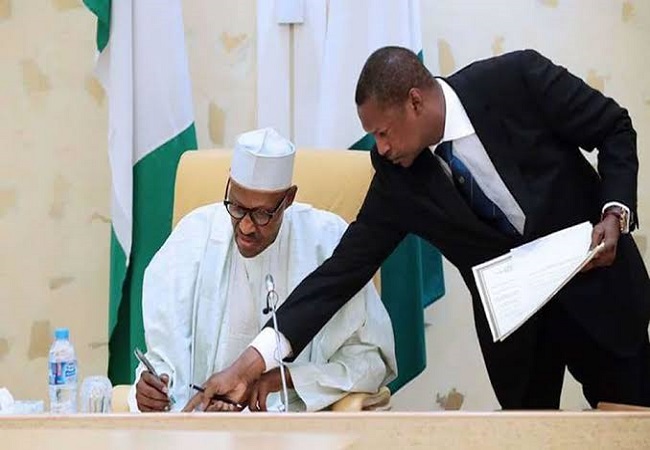
Abubakar Chika Malami, SAN
Nigeria's former Attorney-General of the Federation and Minister of Justice
– Continued From –
ABUBAKAR MALAMI'S FORFEITURE: Punishment or Absolution? – I
The questions raised in the first part of this discussion invite us to move beyond the courtroom and into a far older forum where law, morality and faith converge. Courts are primarily concerned with legality. Their responsibility is to determine rights, liabilities and appropriate sanctions under the law. Religion, however, approaches justice from a broader moral perspective. It asks an additional question that every legal system eventually encounters.
Once justice has been lawfully administered, what remains? Is punishment itself the final destination of justice, or does punishment serve a higher moral purpose?
These questions have occupied civilisations for centuries because punishment has never been understood merely as an instrument for inflicting suffering upon the wrongdoer. Every mature legal tradition recognises that punishment seeks to affirm accountability, protect society, deter future wrongdoing and restore the moral order disturbed by the offence. Yet the two great faiths professed by the overwhelming majority of Nigerians take the discussion one step further. They ask not only why society punishes, but also what society ought to do after punishment has fulfilled its lawful purpose.
Islamic jurisprudence provides one of the clearest frameworks for examining this question. Classical Muslim jurists generally distinguish criminal sanctions into three broad categories. The first are the Hudud—fixed punishments specifically prescribed by Allah for certain offences. The second is Qisas, the law of equitable retaliation governing murder and bodily injury, while also recognising the possibility of forgiveness and financial compensation where the law permits. The third is Ta'zir, comprising offences for which no fixed punishment has been prescribed, leaving the nature and extent of the sanction to the lawful discretion of the judge or the legitimate public authority.
Punishment is not an end in itself. It exists to uphold justice, preserve public order, protect the rights of others and restore the moral balance disrupted by wrongdoing. Its purpose is therefore not the destruction of the wrongdoer but the restoration of the moral order. Law does not exist merely to inflict suffering. It exists to restore balance where balance has been lost, reaffirm accountability where accountability has been violated and preserve the moral fabric upon which every civilised society ultimately depends.
It is within this broader framework that Islamic scholarship discusses the concept of kaffārah—expiation. Although kaffārah has different applications in different areas of Islamic law, the underlying principle remains significant. Certain lawful consequences of wrongdoing may, under the conditions prescribed by Allah, become a means by which the moral burden of that wrongdoing is lifted. Punishment, therefore, is not always understood solely as retribution. Once lawfully administered, it may also become an avenue through which the offender's liability before Allah is diminished, provided sincere repentance accompanies accountability.
This principle is expressed with remarkable clarity in an authentic saying of the Prophet Muhammad, (SAW):
"Whoever commits one of these offences and is punished for it in this world, then it is an expiation for him."
Islam does not envisage a believer being punished twice for the same offence—once in this world through lawful justice and then again in the Hereafter for that very offence—where the conditions of expiation have been fulfilled. The punishment does not glorify the offence, nor does it diminish the seriousness of the wrongdoing. Rather, it demonstrates that justice itself may become an instrument of Allah's mercy.
Perhaps it is here that law and religion consciously part company. A court may pronounce judgment upon a person's legal responsibility, but it cannot pronounce judgment upon his ultimate standing before Allah. The former belongs to the jurisdiction of men; the latter belongs exclusively to the Lord of all worlds. Islam therefore teaches humility even after justice has taken its lawful course, for no earthly tribunal possesses the authority to declare who has been finally accepted or finally rejected by Allah.
The story of Māʿiz ibn Mālik illuminates this principle, when he voluntarily confessed to adultery and repeatedly insisted upon receiving the prescribed punishment. After the sentence had been carried out, some Companions continued speaking unfavourably about him. The Prophet (SAW) immediately corrected them, declaring:
“He has repented with such a repentance that if it were distributed among the people of Madinah, it would have sufficed them.”
The punishment had ended. The repentance had been accepted. Society was not encouraged to continue punishing the man through perpetual condemnation.
The same moral principle appears in the account of the woman from the Ghamid tribe. Having voluntarily confessed and insisted upon accountability, she eventually received the prescribed punishment after every legal safeguard had been observed. Thereafter, the Prophet (SAW) spoke of her repentance in extraordinary terms, saying:
“She has repented with such repentance that if it were distributed among seventy people of Madinah, it would have been sufficient for them.”
These narrations reveal an aspect of Islamic justice that is frequently overlooked. The offender was not reduced to the worst chapter of his or her life. Accountability did not abolish the possibility of restoration. Once justice had fulfilled its lawful purpose, the Prophet (SAW) refused to allow society to convert punishment into perpetual social stigma.
These narrations invite an important distinction that modern public discourse frequently overlooks. Perpetual stigma begins where lawful punishment ends. Once accountability has fulfilled the purpose assigned to it by the law, society must ask whether continued public humiliation serves the cause of justice or merely prolongs punishment beyond its lawful destination.
Perhaps no example illustrates this more beautifully than the story of ʿIkrimah ibn Abī Jahl. His father had been among the fiercest enemies of Islam and one of its most determined persecutors. Following the Conquest of Makkah, ʿIkrimah initially fled, fearing the consequences of his family's long history of hostility towards the Muslims. After sincere intercession on his behalf, he returned, embraced Islam and sought the Prophet's forgiveness. As he approached, the Prophet (SAW) instructed his Companions not to insult his father in his presence, explaining that reviling the dead only hurts the living without benefiting the deceased.
The Prophet (SAW) did not merely pardon a man. He refused to imprison him inside yesterday. In doing so, he established a timeless moral principle: while human beings often define one another by their worst chapter, divine guidance leaves open the possibility that repentance may become the beginning of a new chapter.
By this, the Prophet (SAW) closed the door upon inherited stigma and opened the door to a new beginning. A man was not to remain forever imprisoned by the sins of his past.
Christianity arrives at a remarkably similar moral destination through a different theological path. At the heart of the Gospel is the conviction that justice and mercy need not exist in perpetual conflict. One of the most memorable illustrations appears in the account of the woman accused of adultery. When a crowd prepared to stone her, Jesus (peace be upon him) responded with words that have echoed across centuries:
“Let him who is without sin among you be the first to cast a stone at her.”
One by one, the accusers departed. It reminded every observer that moral accountability must always be accompanied by humility, for no human being stands entirely free from the need for divine mercy.
Although Islam and Christianity explain repentance, forgiveness and salvation through different theological foundations, they converge upon a remarkable moral insight. Human beings are often tempted to remember a person's worst day; both faiths remind us that Allah invites mankind to look beyond yesterday towards the possibility of tomorrow. Justice remains indispensable, but neither tradition encourages the endless imprisonment of a human being within the darkest moment of his past.
Islam and Christianity arrive at this point through different theological foundations, yet both reject the notion that punishment should culminate in perpetual social crucifixion. Neither faith diminishes justice or excuses wrongdoing. Both insist upon accountability while recognising that, once justice has lawfully fulfilled its purpose, society should exercise caution before extending punishment indefinitely through endless public stigma, ridicule or social exclusion.
This essay therefore neither declares Abubakar Chika Malami absolved before Allah nor condemns him before Allah. They belong exclusively to Allah, the Perfect Judge. The purpose of this discussion has been far more modest: to examine whether, once lawful accountability has fulfilled its purpose, society should continue imposing a perpetual stigma that neither the law nor the moral teachings of our great religious traditions appear to encourage.
Justice fulfils the demands of the law. Mercy fulfils the moral aspirations of civilisation. A civilisation worthy of admiration requires both. It neither abandons accountability in the name of compassion nor abandons compassion in the name of accountability.
These moral principles inevitably demand application beyond the circumstances of any single individual. The next part therefore turns from moral philosophy to public accountability. It asks whether the standards by which one politically exposed person is judged ought not to become the standards by which all politically exposed persons are judged.
— To Be Continued —