Understanding the Almajiri Conundrum - An interview with Professor Abdalla Uba Adamu
- Published on December 19, 2024
- By AbdulMajid Haruna
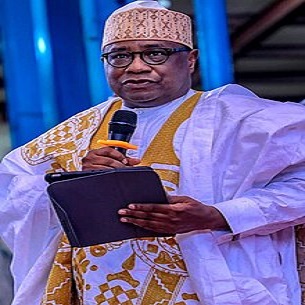
Professor Abdalla Uba Adamu
The former Vice-Chancellor of the National Open University of Nigeria
Interviewer’s Note: Driven by the urgent need to better understand and provide practical solutions to the pressing issue of Almajiranci and out-of-school children in Nigeria, this interview is part of an online think tank series. Through in-depth expert interviews, consultations and solution Journalism, this series aims to offer nuanced analysis and insights into the subject matter. Typically, expert discussions take place in conferences, virtual sessions, and panels, limiting access to their valuable insights for policymakers and the general public. This intellectual resource seeks to fill this gap by serving as a knowledge base and reference point for informed commentary. In this interview with Professor Abdallah Uba Adamu (the former Vice chancellor of National Open University of Nigeria), we discussed many issues ranging from how population explosion affected the Almajiri traditional system ,lack of willpower on the part of government to tackle the issue and Ajamization of western secular knowledge.
Prof. Abdalla Uba Adamu is the former Vice-Chancellor of the National Open University of Nigeria (NOUN). He holds a double professorships in Science Education (1997) and Media and Cultural Communication (2012) from Bayero University Kano, Nigeria. In 1995, he began the Ajamization of knowledge project which is a community literacy project that aims to educate the Almajiri community on the rich and cultural history of Kano using their script of literacy (Hausa written with modified Arabic alphabets). In 2022, he decided to expand the project, and currently the project has a Whatsapp group composed of independent Ajami writers reviving the use of Ajami not only for historical or religious purposes but also for literacy. So far, the project has Ajamized over 50 manuscripts and the most significant highlight of this project is the Ajamization of “The Alchemist” novel by Paulo Coelho.
AbdulMajid: The narrative has always been that of nostalgia. Commentators reminiscing how the system had flourished in the past and how the Almajirai played an integral part in the socio - economic development of the 20th century Northern Nigeria. Where did we get it wrong and how did we find ourselves in the current version of the system?
Prof Abdalla: Population explosion. The system evolved from a simple school to a virtual multi-campus university due to too many children. Government, which had never regulated them, found itself at the deep end and unable to provide an effective regulatory mechanism.
AbdulMajid: commentators also reveal that the system was devoid of begging at first, and even when it was introduced, the aim was to inculcate the habitus of humility and asceticism in the lives of the children. How true is this assertion and how do we solve the problem of begging?
Prof Abdalla: Reading the Qur’an itself is a lesson in humility, so yes that is true. However the Alarammas could not cope with the large number of children sent to them, and the parents don’t usually support the upkeep of their wards when taken to the Alaramma. Unable to feed so many mouths, the children resort to begging and menial labor.
AbdulMajid: Why has contemporary Northern Nigeria society failed to accommodate the Almajirai as it was done in the past where a child engaged in domestic activities for a household and in return he’s offered food and almost adopted by the household?
Prof Abdalla: It still goes back to population pressure and economic crunch. It is everyone for himself now – in the past everyone was “their brother’s keepers”.
AbdulMajid: Talking about the policies, many successive Nigerian governments have rolled out policies to mitigate the ills associated with the current version of the system and several efforts have been made to integrate the system into mainstream conventional education. Unfortunately, there has not been any considerable success. What do you think is wrong with the policies and how can we make adjustments?
Prof Abdalla: Lack of will power of a secular government.
AbdulMajid: Most notable of the interventions was that of former Governor of Kano State, Ibrahim Shekarau and that of Former president Jonathan. It is disturbing that despite the huge amount of money spent by Shekarau and Jonathan, there were no significant improvements. Is this a sign that there are underlying factors impeding the change unknown to the policymakers that exist?
Prof Abdalla: That’s for sure. But even if they are identified, no one is willing to correct the problems.
AbdulMajid: My observation is that since efforts at integrating the Almajiri system into mainstream education have not worked, why not integrate western education into the tsangaya such that integration begins from the tsangayas and not in the classroom. Because reports have shown that, the mallams and the parents of the children were reluctant in sending their children to Jonathan model schools. What’s your opinion on this?
Prof Abdalla: That will also not work. The Jonathan Schools need to be revisited. Parents were suspicious at the beginning. They will be less so now.
AbdulMajid: Systemic factors such as Poverty, high rate of divorce and cultural and religious resistance are factors that have perpetuated enrollment into the system. How best can we provide lasting solutions to these problems?
Prof Abdalla: Reduce poverty through honest economic policies.
AbdulMajid: Your Ajamization of knowledge project whose main objective is to educate Qur’anic schooling system attendees on the rich and cultural history of Kano using the script they can easily understand. How do you think similar projects can help in building the foundational literacy and numeracy of the Almajiri children?
Prof Abdalla: I am convinced the framework can also be used in other disciplines. We are already trying it on our WhatsApp group.
AbdulMajid Haruna is an Education thought leader, and an inclusive education advocate with a primary focus on the vulnerable Almajiri children. He can be reached via email at Abdoulmajeed570@gmail.com