
AVM SALLAU RIBAH: The Price of Public Service and Accountability Without Public Humiliation — III
- Published on October 24, 2026
- By U.S. Machika
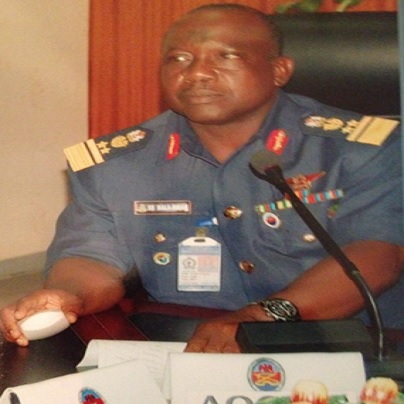
Air Vice Marshal Bala Sallau Ribah (Rtd)
Former Air Officer Commanding (AOC), Nigerian Air Force
Without rolling out AVM Bala Sallau Ribah’s full scorecard as ZEDS president, I consider it sufficient to recall two contributions that deserve historical recognition.
At the height of insecurity in Zuru, during his stewardship, the Emirate witnessed a town hall meeting involving the Governor, the Emir and the Inspector-General of Police, with the support of serving and retired senior military officers of Zuru extraction.
As I recall the events, the gathering followed directives from President Muhammadu Buhari and brought together important stakeholders to confront the security challenges facing the area. It was a significant effort to draw national attention to Zuru’s plight. Whatever other assessments may be made of his tenure, AVM Sallau Ribah played a role in bringing those concerns to the fore, and the meeting deserves to be remembered as part of the community’s response to a difficult period.
Yet the meeting was not the end of the story. A few days afterwards, allegations were levelled against the Emir of Zuru, and AVM Ribah stepped forward in his capacity as National President of ZEDS. He and Emmanuel Rumu were invited and detained. AVM Ribah, the first Air Vice Marshal of the Nigerian Air Force from the Kebbi, Sokoto and Zamfara area, experienced detention in connection with his position as the association’s president. He accepted the burden that came with that responsibility at a difficult time for Zuru’s leadership. I recall writing three articles covering the town hall meeting and the ordeal surrounding the detention:
- The Take Away From IGP’S Town Hall Meeting In Zuru I
- The Take Away From IGP’S Town Hall Meeting In Zuru II
- Zuru: The Aftermath of the IGP’A Town Hall Meeting In Zuru
- Synergy For Zuru’s Lasting Peace: If It Cannot Be Commended, It Cannot Be Condemned
If there was a price attached to his service, that episode was part of it.
I also recall the role played by Garba Musa Maidoki during that challenging period, particularly his efforts concerning Zuru’s security concerns and the eventual release of the ZEDS officials. His intervention was widely discussed, and many people believed that his role contributed to the public calls for him to contest the senatorial seat. The history of those events belongs to Zuru and should be preserved fairly, with credit given where the records support it. If accepting the burdens of leadership during a period of insecurity counts for nothing, we must ask whether we are being fair to those who have stepped forward to serve. A community should not allow administrative disagreements to erase contributions that can be established by evidence.
The second contribution I consider necessary to mention is the ZEDS JAMB Centre. Before the centre became viable, candidates from Zuru and their families faced the inconvenience, expense and anxiety of travelling elsewhere to sit their examinations. There were stories of hardship, particularly involving female candidates who had to travel considerable distances to write the examination. A viable centre closer to home addressed a practical educational need and eased some of those burdens.
Today, the ZEDS JAMB Centre stands as part of the Society’s institutional legacy. AVM Sallau Ribah met less than 70 functional Desktop Computers and a myriad of problems threatening to delist the Zuru JAMP Centre. AVM Sallau Ribah’s contribution to its advancement deserves recognition to the extent supported by the records. This does not mean that every aspect of his tenure must be judged successful. It means only that a fair assessment cannot ignore a contribution simply because the leadership has changed.
Is this, then, the record that should be casually trampled upon by the itchy finger’s of careless words of a small-time content creator? The question is not whether AVM Ribah should be immune from criticism. He should not be, any more than the Emir, the distinguished elders or the author of the press release should be. The question is whether criticism must descend into language that diminishes a person’s dignity when the same institutional purpose could be achieved through restraint and factual precision. A decision to dissolve an executive can be announced firmly without declaring its members unpatriotic or suggesting, without a demonstrated assessment, that their years in office yielded nothing.
A community must also recognise the value of its human capital and the importance of preserving relationships among its distinguished citizens. These are people whose experience, networks and knowledge may continue to serve the Emirate long after they have retired from formal office. To discredit one of them unnecessarily is not merely to injure an individual; it may also diminish the community’s capacity to draw on the experience of its own people.
The same applies to the elders associated with the Board of Trustees. Their reputations should not be needlessly entangled in the wording of a press release in ways that create the impression of personal endorsement where the available evidence does not establish it. Zuru has too much at stake to allow an administrative transition to become a contest in which everyone must choose a side and relationships are sacrificed in the process.
It is also worth remembering that the authority of a traditional institution is strengthened, not weakened, by restraint. The Emir of Zuru is expected to serve as a father to all, including those who agree with him, those who disagree with his decisions and those whose time in public office has come to an end. This does not require the Emir to approve every action taken by an association’s leadership, nor does it prevent the Emirate Council from demanding better performance. Rather, it provides a compelling reason to ensure that disputes are managed in a manner that leaves room for reconciliation and continued service.
This is why I insist that the matter must be addressed appropriately: not to reverse the dissolution, provoke a confrontation with the Emirate or place AVM Sallau Ribah beyond scrutiny, but to establish a standard for the future. Public service deserves accountability, and accountability deserves evidence. Neither should become an excuse for public humiliation. Zuru must be able to change its leadership without destroying relationships, acknowledge shortcomings without erasing contributions, and correct its own affairs without needlessly discrediting those who have served.
I therefore return to the principle at the heart of this series. It is a plea for a higher standard of institutional communication, one that recognises that authority and dignity are not enemies, that accountability does not require humiliation, and that the service a person has rendered to his country and community should not be dismissed through careless or sweeping language.
Zuru’s strength lies not only in its traditional institutions, distinguished military officers, public servants or community associations, but also in its ability to preserve mutual respect when disagreements arise. We cannot celebrate our sons and daughters when they rise to positions of distinction and then treat their reputations as disposable whenever a dispute emerges. Nor should we permit reckless official communication to make tomorrow’s reconciliation more difficult because of today’s unnecessary injury.
If we fail to uphold that standard when someone else is affected, we may one day find ourselves appealing to it when the same treatment reaches our own doorstep.
It is Sallau today; tomorrow, it could be another veteran, another titleholder or any citizen whose reputation is placed in the hands of careless words. The principle must therefore remain bigger than the personality: accountability without public humiliation, and public service without the needless destruction of dignity.