THE ROLE OF TRADITIONAL LEADERS IN PEACE AND SECURITY: A GRASSROOTS PERSPECTIVE
- Published on October 27, 2026
- By By: Hon. St. Heart Chidozie Ogu (JP),
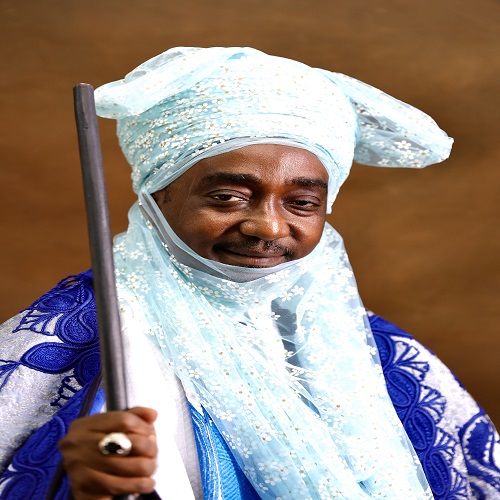
Ambassador Ahmed Nuhu Bamalli
His Highness,The Emir of Zauzau
In Nigeria’s long and difficult search for peace and security, we have looked everywhere: to Abuja for policies, to the barracks for soldiers, and to foreign partners for support, yet, we have often ignored the institution that sits right in the middle of our communities, knows our people by name, and has kept us together for centuries: The traditional institution.
I write not just as a researcher, but as a beneficiary of this institution. As an Igbo man who has lived most of my life in Sabon Gari, Zaria; and who has been graciously honoured through the magnamity of the amiable, dynamic and vibrant Sabon Gari District Head, Alh. Ahmad Bashar Aminu (Dan Barhim Zazzau) with the blessing of His Highness Mal. Ahmed Nuhu Bamalli, CFR, LLD, Emir of Zazzau was turbaned as the Barwan Dan Barhim Zazzau (Barwan Sabon Gari), I have seen first-hand how the throne can be a bridge for peace and national integration.
More Than a Symbol: Traditional Rulers as Security Architects
There is a wrong notion that traditional leaders are merely cultural figures who only confer titles and settle marital disputes, that is far from the truth. In reality, they are the chief security officers of their domains.
Before there were Divisional Police Officers (DPOs) and Department of State Service (DSS) offices in every local government, there was the Sarki, the District Head, and the Mai-Anguwa. No stranger settled in a community without their knowledge. No youth could go wayward without their father reporting him to the palace. It was a system of community policing perfected long before the term was imported.
Today, with banditry, kidnapping, farmer-herder conflicts and urban crime threatening our existence in Kaduna State and across the North-West, that grassroots intelligence system is more needed than ever.
Five Pillars of Their Role
- Intelligence Gathering and Early Warning:
Security is local. A traditional ruler knows his territory. He knows when a strange group arrives at night, when arms are being stockpiled, or when youths are being radicalized. If we empower village heads with communication tools and link them directly to security agencies, we will prevent many attacks before they happen.
- Mediation and Conflict Resolution:
Our courts are overwhelmed and slow. But the palace offers swift, trusted and lasting justice. I have witnessed His Highness, the Emir of Zazzau, Amb. Ahmed Nuhu Bamalli, CFR, LLD, and the Sabon Gari District Head, Alh. Ahmad Bashar Aminu (Dan Barhim Zazzau) resolve decades-old land disputes and communal tensions with wisdom that no court judgement could provide. When a conflict is settled in the palace, it ends with reconciliation, not just punishment.
- The Bridge of Trust:
Nigerians may distrust politicians, but they still revere their traditional rulers. When there is a need for mass mobilization – whether for peace accords, vaccination, voter registration or countering fake news that leads to violence the voice of the traditional leader is obeyed instantly. This trust is a security asset that government must utilize.
- Moral Re-armament and Youth Reorientation:
The root of our insecurity is not just poverty, it is loss of values. The Traditional institutions teach respect, hard work, contentment and community service. A youth who is actively engaged in his cultural heritage and respects his traditional ruler will not easily be recruited into banditry or drug syndicates.
- The Symbol of Unity and Inclusion:
Peace cannot exist without justice and inclusion. The genius of the Zazzau Emirate is its ability to accommodate all. The fact that an Igbo Christian from the South-East can be made a Barwa in the heart of Zaria speaks volumes. It tells every non-indigene that they belong here. When people feel they belong, they protect their community rather than destroy it. This is a model for Nigeria.
Challenges facing traditional institution:
- Lack of constitutional role: The 1999 constitution does not give clear powers to traditional rulers.
- Lack of funding and logistics to run their palaces and vigilante groups
- Political interference which weakens their neutrality.
- The breakdown of family values and respect for traditional authority among some youths.
What Must Be Done?
If we are serious about lasting peace, we must go beyond praise-singing our traditional rulers at occasions and give them real responsibilities.
First, the Nigerian Constitution must be amended to give a defined role to traditional rulers in the security architecture of the country.
Second, State and Local Government must institutionalize a monthly Security Council meeting where Emirs, Chiefs, District Heads and Village Heads sit with the Police, Army and DSS.
Third, traditional leaders must be supported with logistics and allowances to maintain community vigilantes and informants, but under clear regulation to avoid abuse.
Finally, traditional leaders themselves must rise above partisan politics and remain fathers to all – Muslim and Christian, indigene and non-indigene, APC, PDP, ADC and others.
Conclusion:
No amount of military hardware can secure a nation whose traditional fabric is torn. We must return to the basics. The palace is not in competition with the Government House, it is a partner.
In Sabon Gari, we have proven that when the traditional institution embraces all its residents, peace is possible. Nigeria can learn from Sabon Gari.
As Barwan Dan Barhim Zazzau, I pledged my continued loyalty to the Sabon Gari District and to the Zazzau Emirate Council and my commitment to work with all security agencies, tribes, religion and community leaders to ensure that Sabon Gari and the Zazzau Emirate remain peaceful.
God bless Sabon Gari District.
God bless Zazzau Emirate
God bless Kaduna State
God bless Nigeria.
