
RT. HON. AMINU SHAGALI: The Uncommon Urge to Give
- Published on October 27, 2026
- By U.S. Machika

The Uncommon Urge to Give: A Personal Virtue
There are politicians who make promises, others who distribute handouts, and those who distinguish themselves through the tangible difference their giving makes in people’s lives. Rt. Hon. Aminu Abdullahi Shagali, former Speaker of the Kaduna State House of Assembly, has earned a reputation for the latter. His uncommon kyauta—the practice of meeting needs, addressing vulnerable areas, filling critical gaps and easing burdens through gifts freely given—has become so pronounced that it has acquired a characterisation of its own.
I set out to achieve two objectives in this tribute. First, to acknowledge Shagali’s extraordinary generosity, particularly his practice of giving unconditional gifts to members of his constituency. Second, and more importantly, to advance an argument that may challenge the expectations of beneficiaries and non-beneficiaries alike: neither those who have received his gifts nor those who have not are automatically entitled to his generosity.
In my modest interactions with constituents of Sabon Gari Local Government Area of Kaduna State, many regard Shagali as the foremost politician in the area when it comes to kyauta. They effectively place him at the top of Sabon Gari’s political generosity ladder. This is no insignificant distinction in a political environment that has produced prominent figures such as Senator Sulaiman Abdu Kwari, Hon. Garba Datti Mohammed (Babawo), Hon. Kasimu Mohammed, Hon. Bashir Ibrahim Sakadadi, Hon. Sadiq Ango Abdullahi and Engr. Muhammad Ibrahim Usman, among others.
Perhaps the only politician in Sabon Gari who might have surpassed him in this regard was the late Hon. Mohammed Sale Annur. Even Engr. Muhammad Ibrahim Usman, himself widely regarded as generous, was placed a distant second to Shagali in the accounts shared with me.
What makes Shagali particularly interesting, however, is not merely his generosity, but the reputation he has earned for sharing whatever he has with his people. One reported incident illustrates this disposition more vividly than any general description could.
While he was Speaker, Shagali reportedly gave Yusuf Sulaiman (Sarkin Tuta) a Peugeot 206 car. Those present on the occasion included Sulaiman Yahaya (Dandolo), the Sabon Gari APC Local Government Chairman, Bashir Bello (Dankari), Umar Sulaiman and a few others. Shagali later led the delegation to meet Hon. Garba Datti Mohammed (Babawo). During the meeting, Babawo reportedly observed that Dandolo, as the Local Government Party Chairman's official vehicle was off the road. He suggested that the car given to Sarkin Tuta would have been more useful to Dandolo.
Shagali therefore asked Sarkin Tuta to hand over the Peugeot 206 to Dandolo, assuring him that another car would be provided for him within a week. Sarkin Tuta, however, objected, insisting that he needed his car.
Shagali’s response was instantaneous, albeit dramatic. He decided to give Dandolo the Peugeot 206 he had driven to the meeting, then arranged for a tricycle (Keke Napep) to take him home.
The story did not end there. An onlooker who had been nearby washing his car reportedly offered to drive the Speaker home. According to the account, Shagali subsequently gave the man ₦200,000 in appreciation of the gesture.
The incident may help explain the Hausa expression associated with Shagali’s generosity: “In ya sa mu – samu yakan sa ma Shagali haukan kyauta.” Loosely interpreted in this context, it suggests that whenever he comes into something he can share, it triggers a “madness” of giving in him. Humorous, provocative and revealing, the expression captures a public perception that generosity is not merely an occasional gesture for Shagali, but a defining feature of his personality.
During his time as Speaker, Shagali’s reported gifts extended beyond cash to houses, cars, motorcycles, irrigation equipment, sewing machines and employment opportunities. His latest cash distribution has once again brought this uncommon urge to give into public conversation. The current gift session was said to have followed the sale of a plot of land in Abuja, reportedly given to him by the Speaker of the House of Representatives, Rt. Hon. Abbas Tajudeen. The land is said to have been sold for hundreds of millions of naira.
Although the proceeds could have remained entirely his to enjoy, Shagali, true to his characteristic spirit of kyauta, chose to share the windfall with others. He is said to have given individual beneficiaries sums ranging from ₦300,000 to ₦3 million. These accounts, if accurate, indicate the scale of the generosity being discussed.
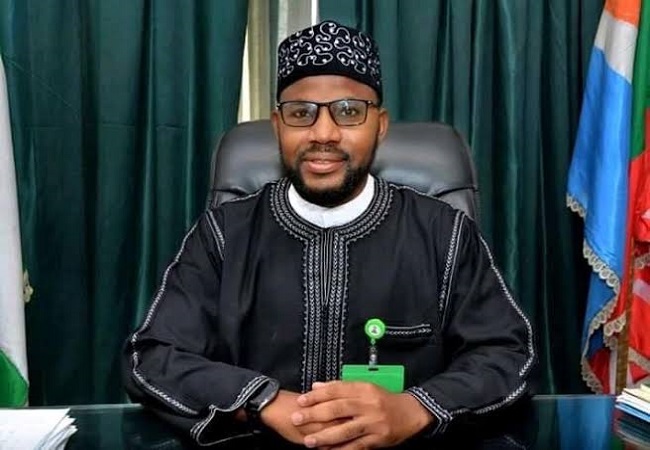
Rt. Hon. Aminu Abdullahi Shagali
Former Speaker of the Kaduna State House of Assembly
The Uncommon Urge to Give: A Personal Virtue
What makes Shagali’s generosity particularly worthy of attention is the distinction between his pattern of generosity and the familiar practice of distributing gifts for electoral advantage. In Nigerian politics, it is not unusual for politicians to become conspicuously generous when seeking elective office, distributing money and gifts in the hope of securing popular support, only to become distant or inaccessible once the elections are over or they leave office. People who were once surrounded by political attention may suddenly find themselves struggling to reach those who previously sought their company.
The accounts surrounding Shagali, however, suggest a different pattern. His giving appears to be a disposition rather than an electoral strategy; an expression of a willingness to uplift others rather than a transaction intended to secure something in return. The distinction is significant. It suggests that his kyauta is not necessarily driven by the immediate need to win votes, retain political loyalty or obtain some personal advantage, but by a willingness to share what he has when the opportunity presents itself.
Perhaps this also offers a different way of understanding his periods of silence. His silence when he has nothing to distribute should not automatically be interpreted as indifference or abandonment. It may simply reflect the absence of the means through which his characteristic generosity is most visibly expressed. From the accounts shared about him, his generosity becomes visible whenever he has the means to share. Whether it is a car, equipment to support a livelihood or financial assistance, the recurring feature of these accounts is his reported willingness to part with what he possesses to improve another person’s circumstances.
This, perhaps, is the more profound tribute to Aminu Shagali: not merely that he gives, but that his giving appears to arise from a disposition to uplift others rather than from a calculated expectation of what he might receive in return. A gift freely given, without strings attached, has a value beyond its monetary worth. It offers assistance without making the recipient feel indebted to a political calculation, and it allows generosity to remain an act of personal choice rather than a transaction. If this pattern reflects his enduring disposition, then Shagali’s uncommon urge to give deserves recognition not simply for what he distributes, but for the spirit of sharing that appears to animate it.
There is something profoundly commendable about a person willing to part with what he possesses to ease another’s burden. Whether through a car that provides mobility or a livelihood, equipment that enables someone to earn a living, or financial assistance that offers relief in difficult circumstances, such gifts can make a tangible difference. Their value should not be diminished simply because they cannot reach everyone. In a society where many struggle to meet everyday needs, a genuine willingness to share deserves recognition.
Yet, even a genuine disposition to give can create expectations that no individual can satisfy indefinitely. A gift is an expression of choice, not a permanent financial obligation. The giver retains the freedom to decide whom to assist, when to give and how much to share. Neither past generosity nor previous political loyalty automatically entitles anyone to a share of another person’s private wealth.
Ultimately, Shagali is free to decide whether to give, whom to assist and how much he can afford to share. Those who receive his gifts have reason to appreciate them, while those who do not must recognise that generosity cannot be extended to everyone. Yet the freedom to choose one's beneficiaries does not diminish the virtue of giving; it is part of what makes the act voluntary in the first place.
Shagali’s uncommon urge to give is therefore worthy of acknowledgement in its own right. His reported acts of generosity, from material gifts to assistance that may help people earn a living, have contributed to the reputation that inspired this tribute. No benefactor can meet every expectation, and no history of generosity guarantees universal satisfaction. But neither should the impossibility of pleasing everyone prevent us from recognising a genuine disposition to give.
In the final analysis, a gift should be appreciated for what it is, not condemned for what it is not. Shagali cannot give to everyone, nor should he be compelled to do so. But where he has freely given, there is good reason to acknowledge the gesture and the spirit behind it.
His uncommon urge to give is a personal virtue, not a public liability—and its value should not be lost in the argument over who received what, or who might have received more.